
Wilfrid, Brandon Asylum, 1930
Age 13
Admission dates: July 1930 to August 1930
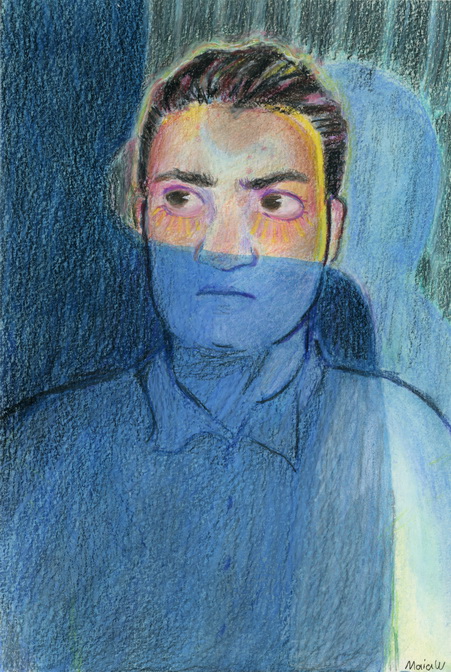
Wilfrid sat on a small wooden chair across from a doctor in his three-piece suit. The smell of cologne made Wilfrid nauseous, and his annoyance grew as the man droned on and on about how bad stealing was. Wilfrid did not care. His family had so little. He was doing what he had to, but no one seemed to understand. At thirteen, Wilfrid wanted to provide for himself and his closest siblings. Watches could fetch a good price, but Wilfrid was not particular—he took what he could get.
At the top of the desk, a black and gold pen caught his eye. Wilfrid did not try to be sneaky; he reached over and grabbed the pen. Maybe he could keep it. Maybe the doctor would stop lecturing him. He sat back, looked the doctor in the eye, and passed the pen between his fingers.
“Wilfrid, put the pen back,” the doctor requested.
“Can I keep it?” he teased.
“No, you may not.” Wilfrid was disappointed that there was not even a smidge of anger in his voice. Just the same serious tone of his lecture.
“Eh, I’ll give it back! But what about your watch? Can I have it? I bet you have more,” Wilfrid pressed. He placed the pen on the desk.
The doctor took this question as an opportunity to continue his lecture and encouraged Wilfrid to admit that he needed to be punished for theft. The young boy’s annoyance turned into anger. Wilfrid rolled his eyes, scoffed, and interrupted the doctor,
“Are you done yet? This is annoying.”
Child Saving
Manitoba passed child specific legislation in the late 1890s including the Human Societies Act in 1895 and a children’s protection act in 1898. These acts laid the groundwork for what is known as child saving. In the first report of the Winnipeg Children’s Aid Society, they indicated the following as their goal:
“To protect society from its enemies, ignorance, vice and crime, by guaranteeing Christian home training to neglected and exposed children, who otherwise will swell the ranks of dangers class.”
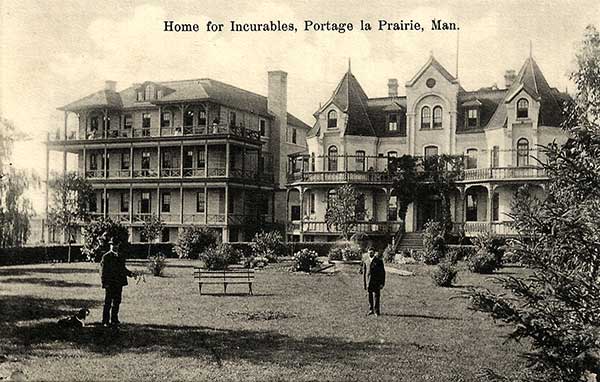
Wilfrid was brought to the Brandon Asylum by the Children’s Aid Society who promised to take him back if he was deemed unfit to be a patient. The superintendent concluded that Wilfrid, while a ‘mental deficient,’ was not fit for the hospital because he was morally perverted, not insane. The doctor regretted his decision to take him in and said that he should be taken before the juvenile court or transferred to the Manitoba School for Mental Defectives in Portage la Prairie.
Juvenile Justice
In 1908, the federal government passed the Juvenile Delinquents Act for criminal offenses of children under sixteen. By February 1909, Winnipeg opened its first juvenile court. The goal of this system was to provide individual guidance and rehabilitation rather than punishment. Most often, boys were brought to juvenile courts for petty crimes, such as theft and truancy. In contrast, girls were accused of incorrigibility for violating gender and sexual conventions.
In practice, juvenile justice produced a system of surveillance of working-class children across different institutions. It created a carceral web that included the educational system, the health system, and carceral institutions for children. The court system was predicated on the belief that poverty led to the creation of a dangerous class. For boys, the goal was to ensure they would grow into a respectable working-class masculinity as productive labourers rather than harden criminals.
Colonialism
Wilfrid’s family was a large Métis family. His mother and father were both previously married, and when his mother passed away his father remarried a third time. For Métis children, eugenics placed them in a category of faulty ‘stock.’ They also faced denial of their identity. Métis people were regularly erased from history and the Scrip commissions held in Western Canada sought to abolish their title to land.
The exhibition Crazymaking explores the effects of colonialism on mental wellbeing and healing. For Métis people, the experiences of residential schools, land dispossession, cultural oppression, and denial of existence have all contributed to a loss of culture, feelings of shame and hidden identity, and intergenerational trauma.